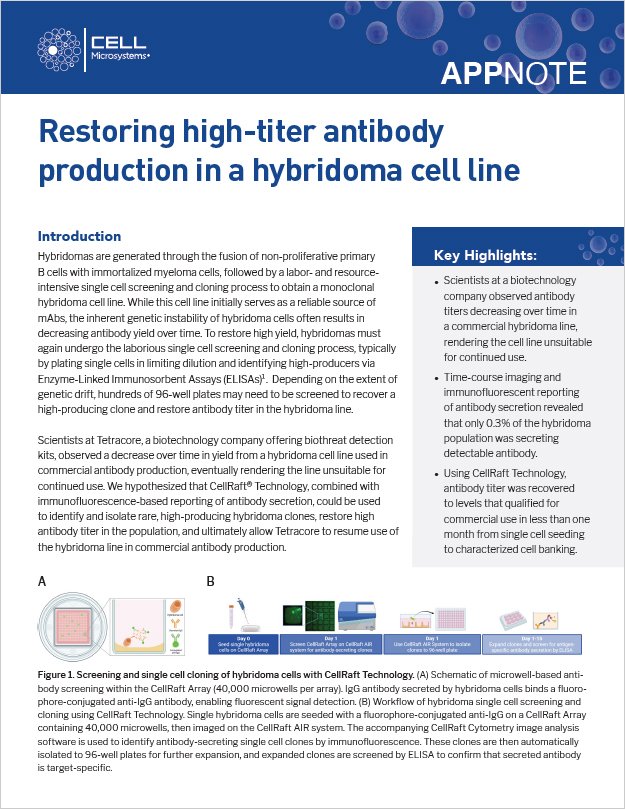
Hybridomas are generated through the fusion of non-proliferative primary B cells with immortalized myeloma cells, followed by a labor- and resource-intensive single cell screening and cloning process to obtain a monoclonal hybridoma cell line. While this cell line initially serves as a reliable source of mAbs, the inherent genetic instability of hybridoma cells often results in decreasing antibody yield over time. To restore high yield, hybridomas must again undergo the laborious single cell screening and cloning process, typically by plating single cells in limiting dilutionA statistical cloning approach where cells are diluted to low density to “hopefully” seed one cell per well; commonly used but can be low-efficiency for difficult-to-clone lines. and identifying high-producers via Enzyme-Linked Immunosorbent Assays (ELISAs)¹. Depending on the extent of genetic drift, hundreds of 96-well plates may need to be screened to recover a high-producing clone and restore antibody titer in the hybridoma line.
Key Highlights: