Automated Patch Clamp
IonFlux delivers industry-leading flexibility and performance in high throughput patch clamp assays
Ion channels are an important, yet under-served drug target class, making up over one fourth of druggable targets
“Despite their attractiveness as drug discovery targets, ion channels remain an under-exploited target class, which is in large part due to the labor intensive and low-throughput nature of patch-clamp electrophysiology.”
Dunlop, J. et al.
Nature Reviews Drug Discovery: 7, 358-368
It is undeniable that patch clamp technology has advanced biomedical research. By leveraging its sheer recording number, Automated Patch Clamp (APC) systems have revolutionized ion channel research.
The APC market is expected to grow past 650M by 2027 (businesswire.com) with APC systems taking center stage in various laboratories from academics’ facilities, government agencies, and large ion channel screening facilities.
The progression from manual to Automated
The traditional manual method to patch clamp using glass pipettes was developed by Erwin Neher and Bert Sakmann and required a highly skilled technician. The technician would position the glass pipette near a cell and apply the appropriate suction to create an electrical seal between the pipette and the cell membrane. The process, also known as the Gold Standard, is considered one of the most effective way to study ion channel currents.
IonFlux Technology
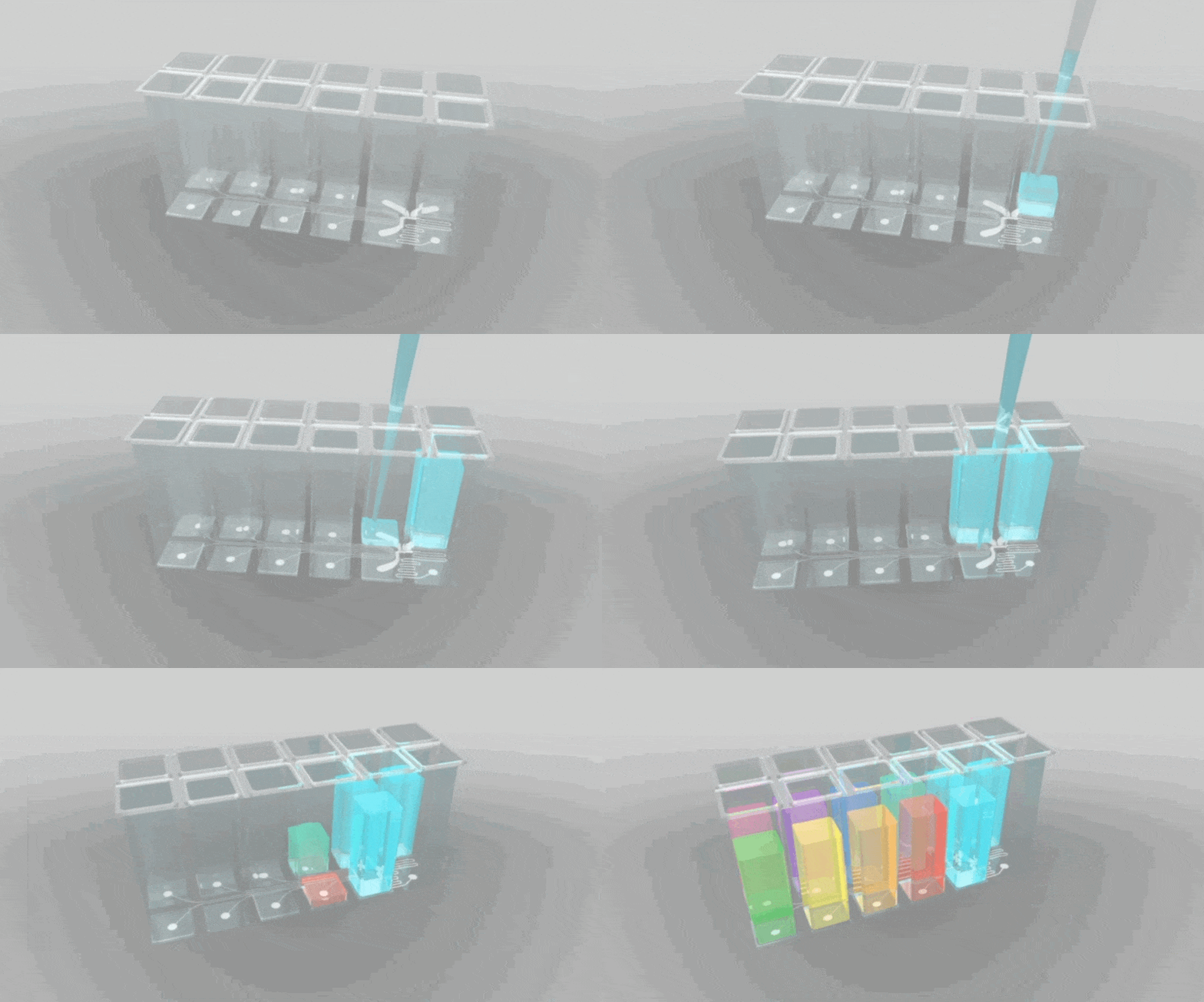
IonFlux systems utilize SBS standard 96 well plates with unique custom microfluidics structures. Cells and solutions are driven using a touchless pneumatic pump, with cell trapping at side channels using the traditional manual patch suction technique. This approach eliminates the need for large liquid handlers to move solutions during an experiment. This unique approach delivers millisecond solution exchange and continuous flow for compound washout.
With a simple plate reader design, IonFlux technology make patch clamp recordings accessible and easy, requiring no more than pipetting skills or any liquid handler to run a full assay. Before an experiment, different solutions are inserted into specific wells on the plate. All solution movement is pneumatically driven within the plate.
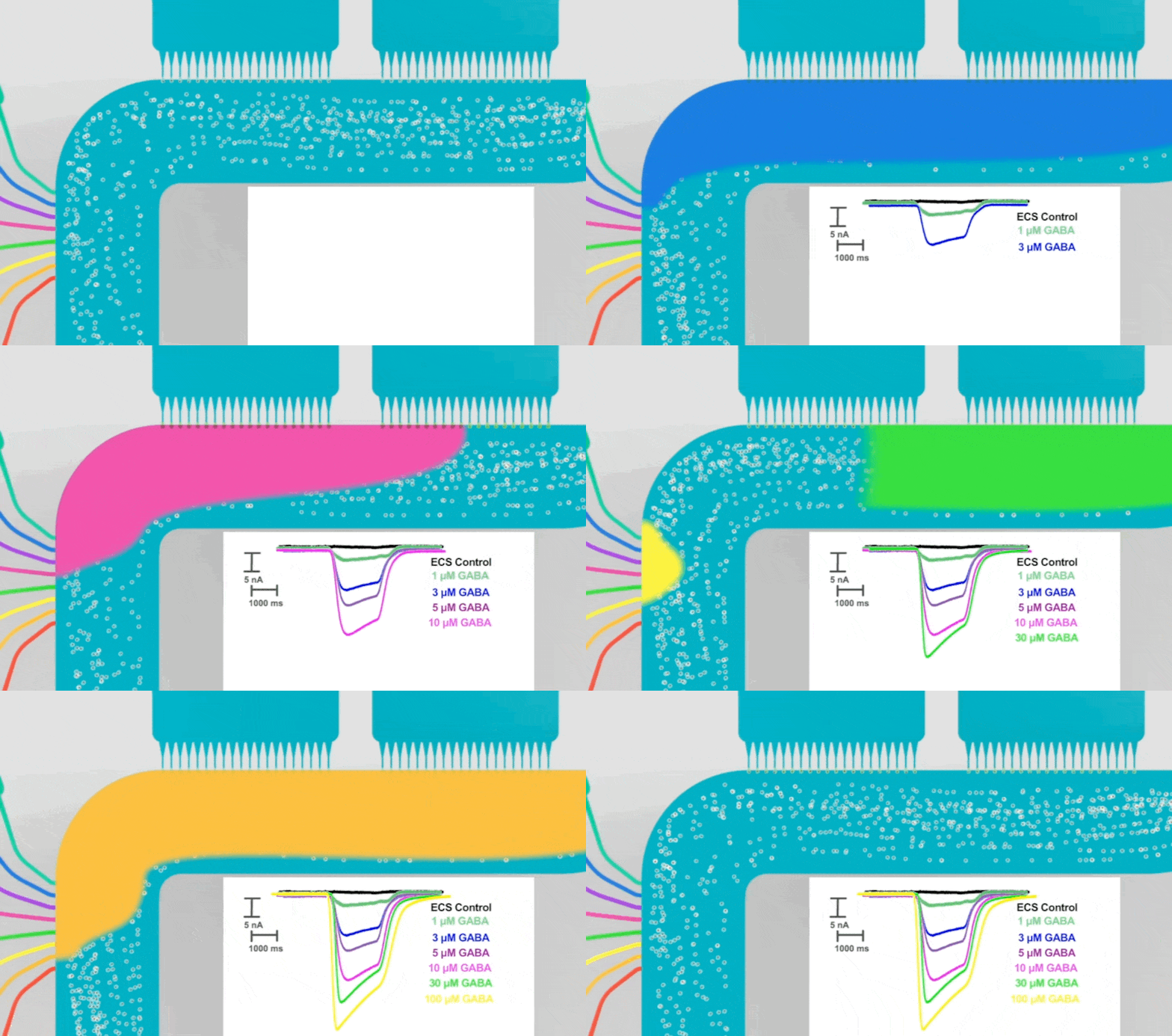
Solutions are programmed to flow sequentially, separated by complete washing with extra-cellular solution. The rapid continuous flow delivers fast solution exchange and facilitates otherwise unachievable ligand-gated and voltage-gated assays.
With a simple plate reader design, IonFlux technology make patch clamp recordings accessible and easy, requiring no more than pipetting skills or any liquid handler to run a full assay. Before an experiment, different solutions are inserted into specific wells on the plate. All solution movement is pneumatically driven within the plate.
IonFlux Application Areas
Recent Research with IonFlux: NMDAR & Schizophrenia