Automated Patch Clamp
IonFlux Mercury 16
Patch Clamp Automation at the Price of Manual
Your new lab partner
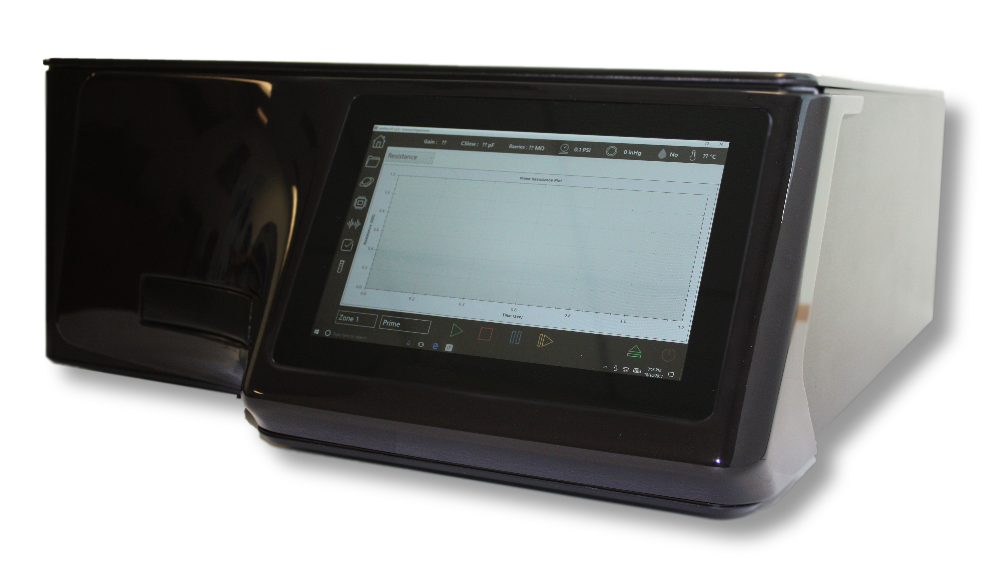
IonFlux Mercury 16 makes automated patch clamp recordings easier and more affordable than ever! Features include 16 parallel recordings using 16 independent amplifiers, remote and touch screen experiment execution, compact “plate reader” footprint, highly extended recording times, exceptionally fast fluid exchange, standardized temperature control, and optional current clamp. IonFlux Mercury 16 is the most advanced yet affordable high throughput automated patch clamp instrument on the market.
Features
- 16 independent recordings
- 8 parallel & independent experiments.
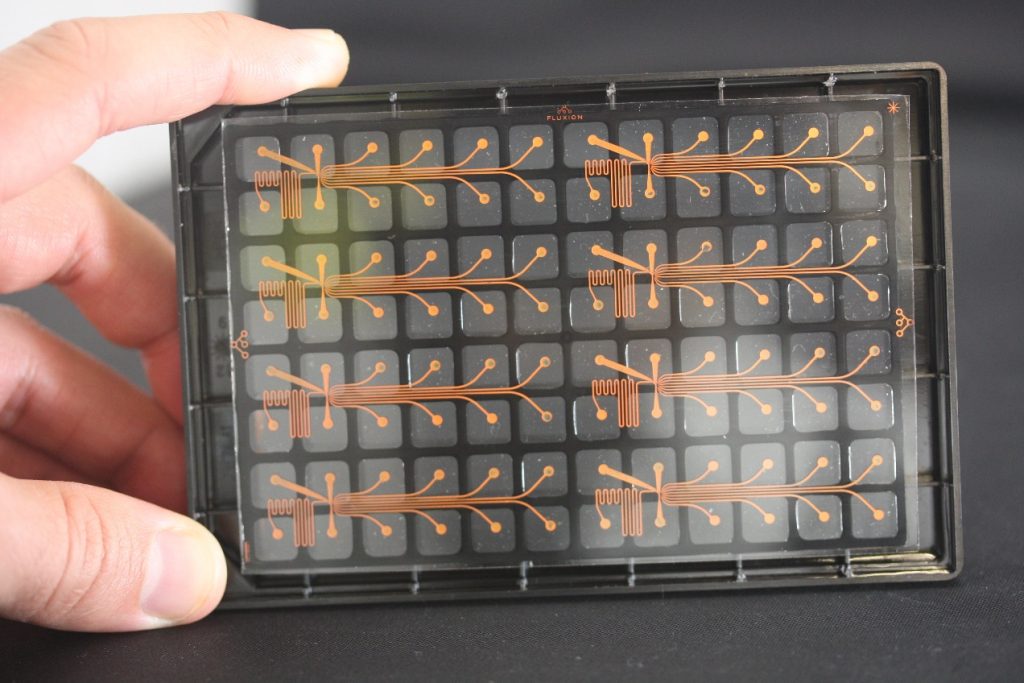
- SBS Standard 96 well Plates. 144 data points per plate
- Flexible synchronous assays
- Continuous flow of solutions and compounds with integrated wash steps for maximum assay stability
- In-plate fast solution exchange without the need for compound pipette stacking
-
Single cell giga-ohm seal recordings and
ensemble recordings (20 cells) with no artificial averaging
-
Integrated temperature control (ambient to
40 degrees). Available cooling system. - Independent cell source for multiple cell types screening at the same time (up to 8)
- Touch screen operation and integrated software for assay developmentDevelopment and optimization of cell-based or biological model systems, including experimental conditions and readouts, to answer specific biologic questions; common in services engagements. and analysis
- Compatibility with XLFit templates for automatic IC/EC50 reporting
- Optional current clamp
- Upgradable to InFlux Mercury HT
700 Data points per hour
Customer Spotlight
Investigating Potent Blockers of TRPM8
IonFlux 16 was used in a recent study aiming to discover novel TRPM8 channel block using automated patch clamp combined with ligand-based virtual screening.
Customer Spotlight
Predicting Unwanted Drug/Heart Interactions with Artificial Intelligence
IonFlux 16 technology was featured in a recent Nature Scientific Reports article describing a study about predicting hERG-induced cardiotoxicity using advanced computational modeling of drug/receptor interaction.