The BioFlux system is a game-changer in the world of experimental research. By employing a multiplexed array format, it revolutionizes the way flow cell experiments are conducted. Just picture this: a single 48-well plate has the potential to run an impressive 24 assays concurrently. And with the introduction of the Quattro add-on, a staggering 96 experiments can run in parallel. This substantial boost in data throughput means researchers can delve into more conditions, test hypotheses, and uncover drug pharmacology faster than ever before. But as we’ll learn in this case study, the real-world benefits go far beyond multiplexing.

Dr. Clemence Belleannée and her team at the University of Laval take advantage of BioFlux system’s contactless pumping to improve experimental throughput and data integrity
While the BioFlux system’s capacity for multiplexing experiments is widely celebrated, there’s an equally vital but less-discussed feature that significantly elevates both throughput and data integrity: “contactless” pumping. In this case study, we’ll delve into the concept behind contactless pumping, its crucial features, and its transformative impact in the laboratory of Dr. Clemence Belleannée at the Universite Laval in Quebec City, Canada who has been using BioFlux since 2015.
Overview
The unique technology of the BioFlux system has left an indelible mark on Dr. Belleannée’s research team at the University of Laval. Their work focuses on developing a reversible male contraceptive that preserves male fertility and additionally, explores novel therapeutic approaches to prostate cancer.
Challenges
The team sought a system that could investigate the function and response of shear stressThe tangential force per unit area from flowing fluid; a key parameter in vascular biology, platelet function, leukocyte rolling, and biofilm adhesion studies. without requiring fluid exchange, to reduce the likelihood of contamination.
Outcomes
Fluxion’s BioFlux system, with its gas-driven flow cell setup, met the team’s needs without necessitating fluid exchange. This has empowered their research in numerous ways.
Key Benefits (according to Dr. Belleannée)
Ditching the Drawbacks of Traditional Microfluidic Flow Cells
In traditional flow cell systems, even the microfluidic ones, fluid flow is typically managed by syringe pumps, peristaltic pumps, or similar direct-fluid-contact approaches. However, the BioFlux system takes things a step further with its pneumatic pressure-driven pumping mechanism.
The limitations of traditional liquid pumps in conjunction with microfluidic flow cells are glaring:
BioFlux Pneumatic Pumping: The Key to Precision, Multiplexing, and Speed
To address these issues, Fluxion introduced the innovative use of pneumatic pressure-driven flow within the BioFlux system. The system integrates an array of microfluidic flow cells into the base of a standard size plate, solving the “macro to micro interface” challenge inherent to many microfluidic devices. In its simplest form, a microfluidic flow cell comprises an inlet well and an outlet well connected by the microfluidic flow cell channel.

Pneumatic pumping-precision without liquid contact
Pneumatic tubing connects to the interface to deliver gas pressure to the microfluidic well plate. The controller delivers precise gas pressure based on the user-determined flow profile for the experiment.
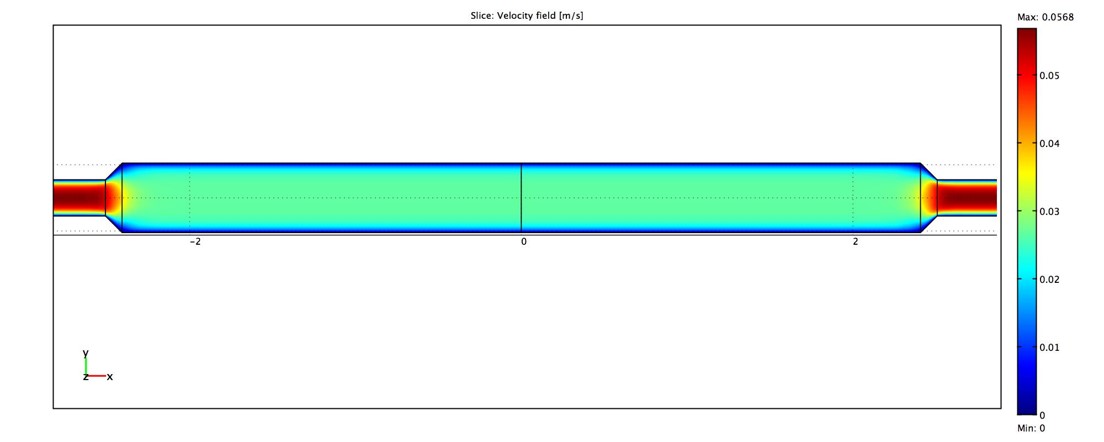
Computational fluid dynamics is used to model flow in the microfluidic channels. The flow profiles are then validated experimentally. This image of the CFD-analyzed flow demonstrates the uniformity of the wall shear stress profile across the BioFlux 48-well low shear stress plate. The channel diameter is 350um- 5 human hairs.
The Unparalleled Benefits of BioFlux’s Pneumatic Pressure-Driven Pumping
Learn more about the BioFlux System and the difference it can make in your lab.

Dr. Anson Blanks completed his BS in exercise physiology at East Carolina University and his MS in clinical exercise science at Appalachian State University. After working as a clinical exercise physiologist in cardiopulmonary rehabilitation, Dr. Blanks decided to pursue a career in scientific research. He attended Virginia Commonwealth University, where he completed his Ph.D. in Rehabilitation and Movement Science. After spending several years as a research and development scientist in biotechnology industry, Dr. Blanks is now the Scientific Marketing Manager for Cell Microsystems in Durham, NC.