Sf9 Cell Lines

vline gray 1

Succeed in Developing Monoclonal Sf9 Cell Lines

The baculovirus expression vector system (BEVS), one of the most versatile eukaryotic vector systems, enables the in vitro expression of heterologous genes in insect cells. However, generating insect Sf9 clones for recombinant protein production has been almost impossible due to unique challenges presented by Sf9 cells with traditional methods, such as limiting dilution and droplet-based sorting.

Traditional Sf9 cell line development

  • High Costs – Limiting dilution and sorting are expensive and labor-intensive
  • Low To No Viability – Stressors, such as low seeding density and high-pressure sorting reduce cell survival of highly sensitive cells
  • Unwanted Protein Production Variability –Ā  Expansion using polyclonal cells creates unstable cell lines with unreliable protein production
  • Increased EfficiencyĀ – Huge reduction in consumable usage and less than 2 hours of hands-on time
  • Clones That Grow – Gentle isolation by gravity combined with shared culture media exponentially increase survival and growth
  • Monoclonality – Expansion of truly monoclonal colonies into stable cell lines
Sf9 workflow
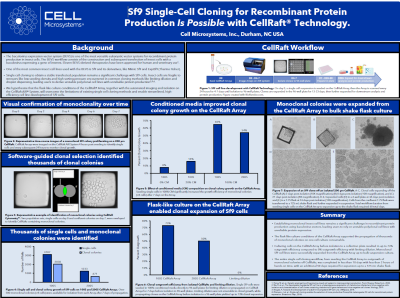
Sf9 cell growth
Sf9 vs. limiting dilution
Sf9 clonal outgrowth efficiency from isolated CellRafts and limiting dilution.

Learn how to quickly and affordably generate monoclonal Sf9 production cell lines

Scientific Poster

A scientific poster comparing the development of cell lines from Sf9 cells using an optimized CellRaft AIR workflow compared to limiting dilution.Ā Ā 

Application Note

An application note detailing the CellRaft AIR protocol for the development and expansion of monoclonal cell lines from Sf9 cells.Ā 

vline gray 1

Software-guided Identification and Automated Isolation of Cells of Interest

CellRaft Cytometryā„¢ software allows for image-based verification of single cells to ensure monoclonality and analysis of a variety of parameters over time, ranging from size to morphology to gene expression. Users can easily define the characteristics of the target cells or colonies and map them for software-guided CellRaft selection and automated isolation by the CellRaft AIR System.

1937929574 783dc7a2c6192d3399c9cdbacb9eddeb7c1260120c5e2ba66b945d2b4bc11254 d 840?region=us

Image Cells

Cells are plated on a CellRaftĀ® Array using standard plating techniques, eliminating the need for trypsin, scraping, high-pressure fluidics, and limiting dilution. The array is scanned, imaged, and recorded, allowing the user to track cells as they grow over time.

Grow Cells

Target cells grow unperturbed in optimized conditions in the imaging platform, increasing cell viability, and downstream read depth. The CellRaft Arrays allow different media, compound dosing, and growth conditions to be tested on a single consumablepropriety culture dish.

Isolate Cells

When target cells are ready for collection, the gentle release mechanism leaves cells unperturbed, so transfer to a PCR or culture plate won’t affect the quality of the cells for downstream analysis. Cells are also moved into lysis buffer quickly, preventing the degradation of genetic material in sensitive cell lines.

Contact Us

If you need support for a product, please submit a support request.