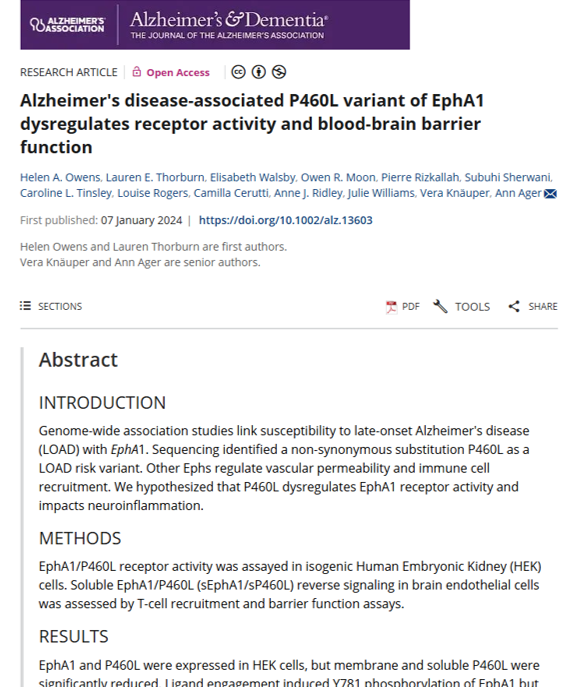
In this investigation, Owens et al. used a BioFlux Shear Flow System to examine the impact of non-synonymous gene substitution on susceptibility to last-onset Alzheimer's disease (LOAD). T cell-endothelial cell interactions were visualized under physiological shear stress. The group found that soluble EphA1 significantly increased T cell adhesion to endothelial cells, thereby increasing LOAD risk.
Researchers at Columbia University used the CellRaft AIR System to support the development of precisely engineered human embryonic stem cell (hESC) lines for a study...
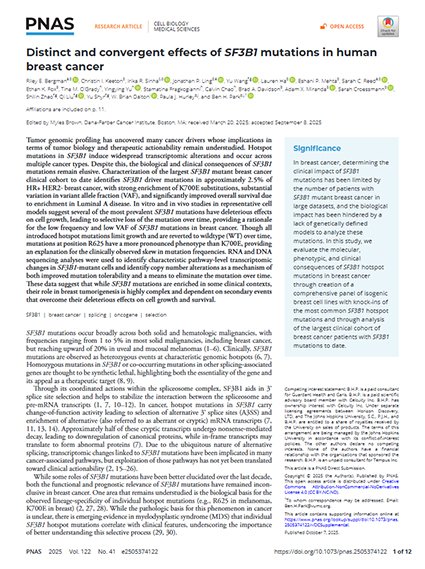
In this study, CellRaft AIR was used to isolate, verify, and expand monoclonal cell lines carrying engineered SF3B1 mutations, forming the basis of an isogenic...
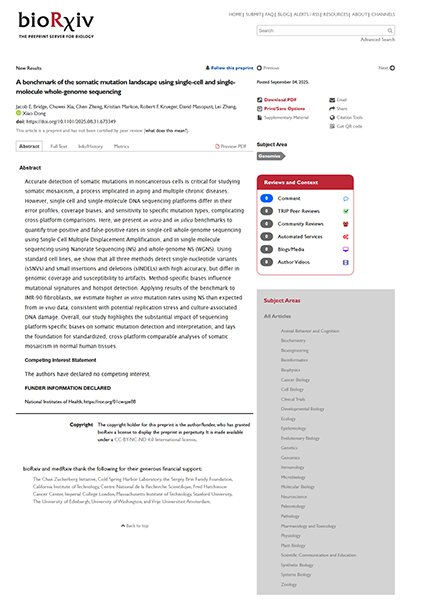
In this work, CellRaft arrays were used to generate clonally derived cell populations from single cells prior to sequencing, providing a ground-truth reference for benchmarking...