Blog

Enhancing CRISPR Gene Editing Efficiency: Key Insights from Our Latest Webinar

a finger pointing at a screen

In a recent webinar, Dr. Jessica Hartman shared her expertise in CRISPR and gene-editing workflows, offering valuable insights into the challenges and solutions for creating reliable, edited cell lines. Here’s a look at the main takeaways and how innovative technology is changing the game for scientists in this field.

Addressing the Inefficiencies in Gene Editing

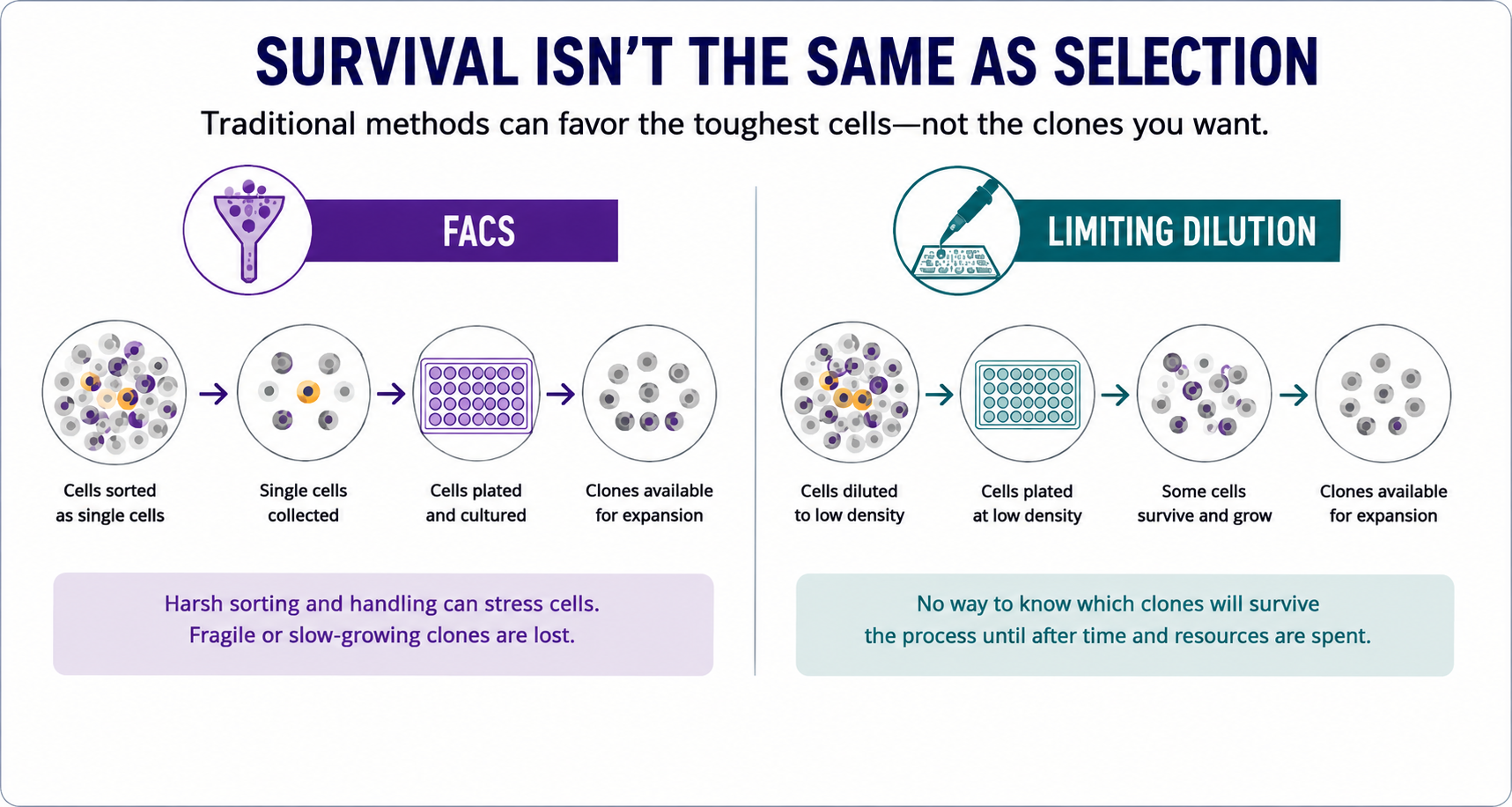
Gene editing and CRISPR workflows are often hampered by inefficiencies, high costs, and low success rates. Dr. Hartman highlighted the common difficulties scientists face in isolating single clones, the stress introduced to cells during the process, and the limited success of traditional methods like limiting dilution. She explained that while methods like CRISPR offer precision, they can lead to issues like off-target effects or significant cellular stress.

a diagram of gene editing

Solutions with CellRaft Technology

CellRaft Technology provides a streamlined approach to improve cell viability and gene-editing efficiency. Dr. Hartman detailed how this technology allows scientists to culture and monitor cells on a single platform, reducing the need for multiple instruments and lengthy protocols. By creating a favorable, “flask-like” culture environment within the CellRaft Array, researchers can maintain cell health, even for rare or challenging cell lines.

This technology offers several key advantages:

  • Improved Viability: CellRaft Technology minimizes stress on cells by eliminating the need for fluidic systems or high-pressure sorting. 
  • Enhanced Clonal Confirmation: Users can visually track cell development from a single cell to a full colony, confirming monoclonality.
  • Faster Results: The system enables researchers to generate large numbers of edited clones weeks faster than traditional workflows.
a screenshot of a graph showing isolation efficiency

Real-World Applications and Success Stories

The webinar included compelling case studies demonstrating the impact of CellRaft Technology across various applications. For example, researchers used the system to edit rare kidney podocytes, achieving clonal stability and confirmation of the desired genetic modifications within 18 days—something previously unattainable with conventional methods. Similarly, a collaboration with N.C. State yielded successful editing of iPSC lines for neurological research, even allowing differentiation into neurons and organoids without compromising cell health.

a diagram of a cell line development

Scaling Up for Future Research

The ability of CellRaft Technology to generate and screen thousands of clones quickly has made it a preferred choice for labs looking to conduct studies using gene edited cells. In the examples shared, researchers were able to analyze and isolate hundreds of edited cells, and easily find the edit they were looking for, reducing the need for extensive manual work.

a screenshot of cells on a CellRaft

Final Thoughts

This webinar underscored the system’s transformative potential for CRISPR research, making gene editing faster, more efficient, and ultimately more successful. For scientists tackling challenging cell types or complex editing workflows, CellRaft Technology offers a pathway to better research outcomes and reliable, reproducible results.

If you have questions about CellRaft Technology for CRISPR applications or are interested in our lab services, send me an email at jessica.hartman@cellmicrosystems.com.

team Jessica Hartman
Jessica Hartman, Ph.D.
Senior Director of Product Applications | jessica.hartman@cellmicrosystems.com

Dr. Jessica Hartman has a B.S in Biology from the University of Virginia, a Ph.D. from Duke University in Molecular Cancer Biology and postdoctoral training in Biochemistry and Cancer Biology at Baylor College of Medicine and Duke University, respectively.  She has previously served in Director-level roles, managing bioscience research and development for biotechnology companies. At Cell Microsystems, Dr. Hartman’s role is to lead the development of new and streamlined workflows using the CellRaft Technology and its associated products.

Related Posts

Lessons Learned Growing Clones From Over 100 Cell Lines 
Historically, cell line development has predominantly relied on a limited number of cell lines such as CHO-K1, HEK293T, and HeLa.…
Kite Pharma’s Single Cell Cloning Process Improved
The satisfaction that comes from seeing a carefully designed experiment unfold and coalesce into a clue, an answer, or a…
Why Do Cells Need Each Other?
Single cell workflows are hot topics in scientific research today. The ability to turn a single cell into a viable…