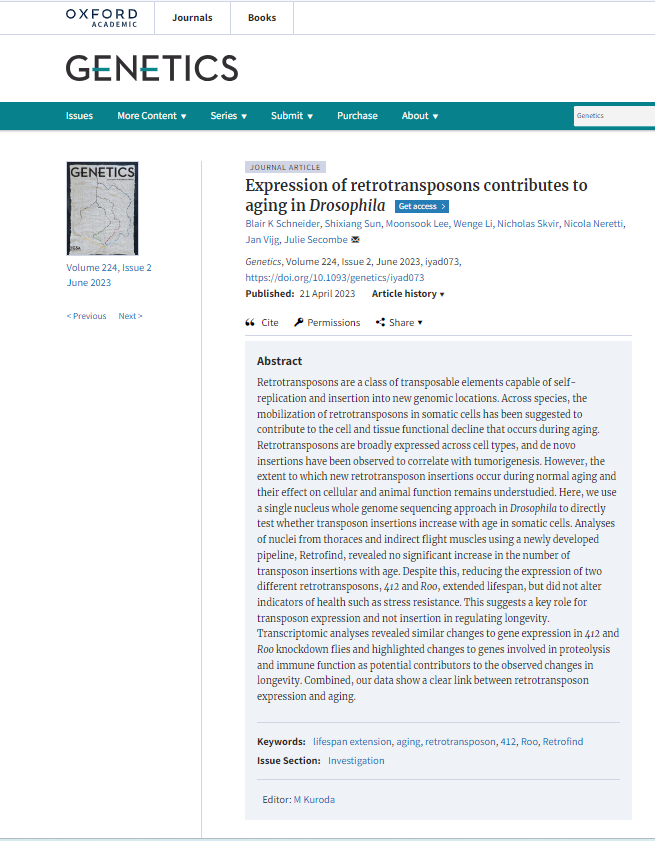
Retrotransposons are a type of transposable elements that can self-replicate and self-insert into new genomic locations. Retrotransposons can also contribute to cellular and tissue degeneration associated with tumorigenesis and aging. To assess whether retrotransposon mobility changes with aging, single nucleus whole genome sequencing was performed in Drosophila somatic cells at varying life stages. The nuclei and RNA were separately extracted from somatic cells using the CellRaft AIR system. The DNA from the nuclei were then made into libraries for whole genome sequencing. Although the retrotransposon insertions did not increase with age, reducing the expression of two different retrotransposons extended the lifespan, linking retrotransposon expression with aging.