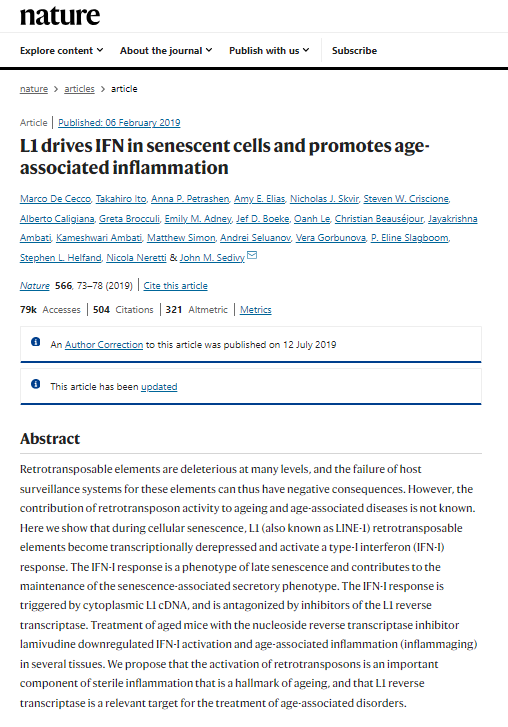
In this study, retrotransposable elements at many levels are known to be deleterious and fail host surveillance systems resulting in negative consequences. To understand more on age-associated disorders, L1 retrotransposable element was studied in its role in IFN response. CRISPR/Cas9 knockouts were generated, and drug selected for co-infections of IFNAR1 and IFNAR2 vectors. Edited early passage cells were seeded on a CellRaft Array to generate monoclonal colonies. 24 single cell derived colonies were isolated and expanded for genomic screening of the CRISPR cut site performed by the CRISPR Sequencing Service CCIB DNA core at the Massachusetts General Hospital. The successful knockout of IFNAR1 and IFNAR2 was verified in 4 out of the 24 expanded clonal cell lines. The researcher was able to identify activation of retrotransposons as an important component in inflammation related to aging and L1 could be a target for the treatment of age-associated disorders.