CellRaft Arrays were used to track growth of singly sorted cells into enteroids. Cells were sorted using the mAb F5C12 from intestinal epithelium of Lgr5-GFP reporter mice. Single-cell growth analyses were performed as described by identifying microrafts containing single cells and assessing enteroid contents of those specific microrafts 7 days later. The analysis revealed that enteroids on various CellRafts had distinct morphological differences. It was also discovered that spheroids predominantly express Bmi1, but express Lgr5 during crypt-bud formation. This method of culturing cells on the CellRaft Array not only can allow for the formation of enteroids, but enables the user to track specific differences in morphology among individual organoids in real time and in bulk culture.
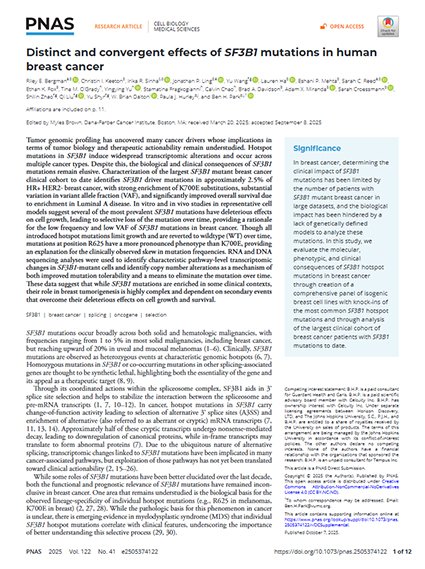
Researchers at Columbia University used the CellRaft AIR System to support the development of precisely engineered human embryonic stem cell (hESC) lines for a study...
In this study, CellRaft AIR was used to isolate, verify, and expand monoclonal cell lines carrying engineered SF3B1 mutations, forming the basis of an isogenic...
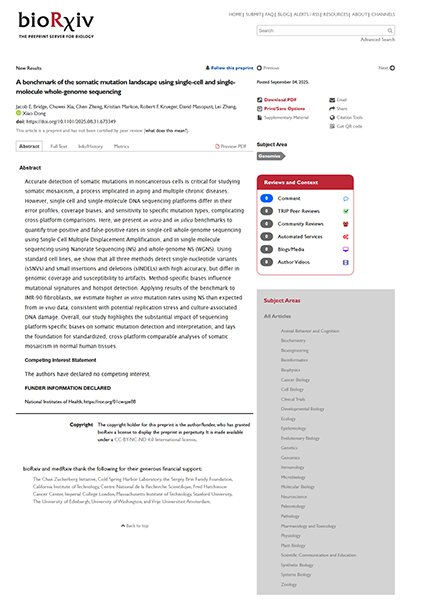
In this work, CellRaft arrays were used to generate clonally derived cell populations from single cells prior to sequencing, providing a ground-truth reference for benchmarking...